Historical Magical Typeface Review
I was staring at a blank brand board for a boutique skincare line last Tuesday, the kind of project that demands personality without sacrificing elegance. The client wanted something that felt timeless yet approachable, and my usual go-to Script Handwritten options felt either too rigid or too casual. That is when I pulled up Historical Magical. As one of those versatile Fonts that promise enchantment, it needed to deliver on more than just a pretty preview image. I dropped it into a logo concept, tested it on a packaging mockup, and ran it through a full visual identity draft. Here is what I found after putting this typeface through its paces in a real-world design workflow.
Using Historical Magical for Boutique Brand Identity and Logos
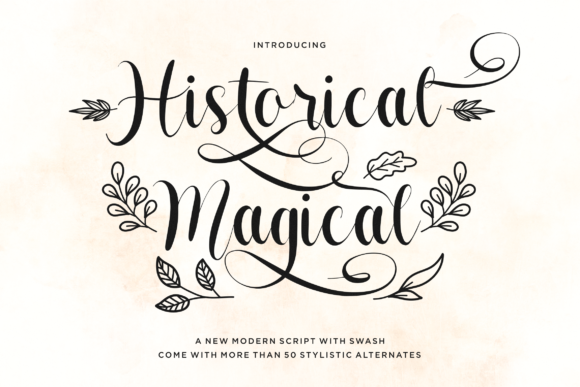
Historical Magical is an enchanting handwritten font that immediately establishes a mood of refined nostalgia. When I first typed out the brand name for the skincare project, the letters connected with a fluidity that felt organic rather than mechanically perfect. This is crucial for Script Handwritten styles because modern audiences can spot a fake script from a mile away. The strokes have varying weights that mimic the natural pressure of a pen, giving the logo a human touch that builds trust. Among the many Fonts in my library, this one stands out for its ability to act as a standalone logo mark without needing heavy embellishment.
In terms of application, I found it worked beautifully as a primary logo element. The swashes are elegant but not so exaggerated that they interfere with legibility. For a brand identity, consistency is key, and Historical Magical maintained its character across different scales. I tested it on a business card layout, and even at smaller sizes, the essential shapes of the letters remained distinct. However, I would caution against using it for tiny legal text or ingredients lists. It is best suited as a display font or headline font where it can breathe. If you are designing a logo for a bakery, wedding planner, or artisan shop, this typeface offers that premium feel clients often request.
Historical Magical for Packaging Design and Product Labels
Packaging design is where typography meets physical reality, and Historical Magical shines here. I placed the font on a mockup for a lavender soap label, pairing it with a clean, minimal sans serif font for the product details. The contrast was striking. The Script Handwritten nature of the title drew the eye immediately, creating a clear visual hierarchy. Shoppers scan shelves quickly, and a font with this level of charm stops the scroll, or in this case, the walk-by. It adds a layer of perceived value, making the product feel handmade and curated.
One technical detail that saved me time during this phase was the encoding. Historical Magical is PUA encoded which makes accessing special characters and ligatures incredibly smooth. In previous projects with poorly encoded fonts, I have wasted hours hunting for the right glyph or dealing with missing symbols. With this font, the alternates were easily accessible, allowing me to tweak the wordmark until the spacing felt perfect. For product labels, where space is often limited, being able to swap in a tighter ligature or a shorter tail on a letter like "y" or "g" is a massive advantage. It allows for custom-looking typography without needing to manually vectorize every letter.
Designing Social Media Graphics and Web Headers with Historical Magical
Digital presence requires versatility, and Historical Magical translates well to screens. I used it for Instagram story templates and website hero headers. On social media, where content moves fast, the font’s decorative qualities help create stop-the-scroll moments. It works particularly well for quotes, announcements, or seasonal greetings. Because Historical Magical is an enchanting handwritten font, it brings warmth to digital spaces that can often feel cold and corporate. I paired it with plenty of white space to ensure readability on mobile devices, a critical consideration for modern web design.
For web headers, I kept the usage brief. Long paragraphs in a Script Handwritten style are a recipe for user fatigue. Instead, I used it for H1 headings and call-to-action buttons that needed a soft touch. The font loads cleanly as a webfont, maintaining its integrity across browsers. If you are a content creator or blogger, this typeface can elevate your post titles or ebook covers. It signals creativity and attention to detail, which helps in building a loyal audience who appreciates aesthetics. Just remember to test contrast ratios; the delicate strokes need a solid background to remain visible.
Pairing Historical Magical with Serif and Sans Serif Fonts
No font exists in a vacuum, and knowing how to pair Historical Magical is half the battle. Since it is a decorative Script Handwritten typeface, it needs a stable partner. I had great success pairing it with a classic serif font for a more traditional, editorial look. The serif provided structure and authority, while the script added emotion. For a more contemporary vibe, I paired it with a geometric sans serif. This combination feels fresh and modern, suitable for tech-forward brands that still want a human element. When browsing through Fonts for pairing, look for typefaces with similar x-heights to ensure visual harmony.
Avoid pairing it with other overly decorative scripts. Two competing handwritten styles create visual noise and reduce professionalism. Keep the supporting fonts simple and neutral. Let Historical Magical be the star. This approach ensures that your design assets remain cohesive and that the brand message is not lost in typographic chaos. Whether you are designing a menu, a flyer, or a magazine spread, this rule of thumb will keep your layouts clean and effective.
Practical Licensing and Final Design Considerations for Historical Magical
Before you commit to using Historical Magical in client work, always review the licensing agreement. Commercial use rights vary, and you need to ensure you are covered for logos, packaging, and digital products. I always check if the license covers print-on-demand merchandise, as this is a common pitfall for designers. Once cleared, this font becomes a reliable tool in your kit. It is not suitable for every project—avoid it for corporate annual reports or high-density informational signage—but for brands that rely on emotion, storytelling, and aesthetics, it is a powerful asset.
In conclusion, Historical Magical delivers on its promise of enchantment. It is a versatile, well-crafted Script Handwritten typeface that handles real-world design challenges with grace. From the ease of PUA encoding to its stunning performance on packaging and social media, it earns its place among premium Fonts. If you are looking to add a touch of magic to your next branding project, this typeface is worth the download. Just remember to test it in context, pair it wisely, and let its natural beauty do the heavy lifting.