Princess Lily: An Elegant Script Font for Modern Branding
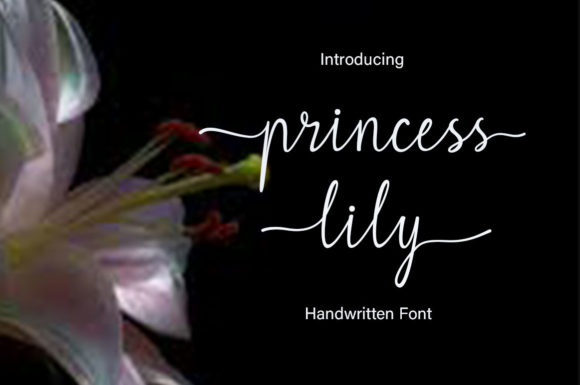
When I first loaded Princess Lily into my design software, I was working on a visual refresh for a boutique skincare line that needed to balance luxury with approachability. As an experienced brand designer, I have tested countless Fonts, but finding a Script Handwritten typeface that feels both timeless and contemporary is rare. Princess Lily immediately stood out because it is an elegant script font with a contemporary atmosphere and impeccable form, inspired by timeless classic calligraphy. This specific blend of old-world charm and modern cleanliness is exactly what high-end branding projects often lack.
Using Princess Lily for Luxury Logo Design and Brand Identity
In the context of logo design, Princess Lily performs exceptionally well as a primary display element. During my test with the skincare project, I placed the font on a minimalist label mockup. The result was striking. Because Princess Lily is an elegant script font with a contemporary atmosphere and impeccable form, inspired by timeless classic calligraphy, it carries a weight of sophistication without feeling stiff or overly formal. Many Script Handwritten Fonts struggle with legibility at smaller sizes, but the stroke contrast in Princess Lily remains distinct, ensuring that the brand name is readable even when scaled down for product packaging.
The personality of this typeface suggests refinement. It is not loud or aggressive; instead, it whispers elegance. For business owners in the beauty, wedding, fashion, or artisanal food sectors, this font can instantly elevate perceived value. When I compared it against other popular scripts in my library, Princess Lily felt more balanced. The curves are smooth, and the terminals are sharp, giving it a polished look that rivals custom lettering. This makes it an ideal choice for entrepreneurs who want a bespoke feel without the bespoke price tag.
Princess Lily for Packaging Design and Product Labels
Packaging design is where typography meets physical reality, and this is where Princess Lily truly shines. I tested the font on various mockups, including candle jars, chocolate boxes, and serum bottles. The fact that Princess Lily is an elegant script font with a contemporary atmosphere and impeccable form, inspired by timeless classic calligraphy, allows it to sit beautifully alongside sans serif secondary fonts. In one layout, I paired it with a clean, geometric sans serif for the ingredient list and product details. The contrast between the organic flow of the script and the rigid structure of the sans serif created a dynamic visual hierarchy that guided the eye naturally.
One critical technical advantage here is the encoding. This font is PUA encoded which means you can access all of the gly phs easily. For a designer, this is a massive time-saver. Instead of hunting through character maps or using complex Unicode inputs, I could quickly swap in alternate swashes and ligatures to customize the logo lockup. This flexibility is crucial in packaging design, where space constraints often require tweaking letter connections to ensure perfect kerning. The ability to access these alternates seamlessly makes Princess Lily a versatile tool in any designer’s arsenal of Fonts.
Integrating Princess Lily into Web Design and Social Media Graphics
Beyond print, I explored how Princess Lily translates to digital spaces. I used it for a website hero header and several Instagram post templates. As a Script Handwritten typeface, it adds a human touch to digital interfaces, which can help brands feel more authentic and connected to their audience. However, readability on screens is always a concern with scripts. Because Princess Lily is an elegant script font with a contemporary atmosphere and impeccable form, inspired by timeless classic calligraphy, it maintains clarity even on retina displays. I found it worked best for short headlines, quotes, or call-to-action buttons rather than long paragraphs.
For social media graphics, the font’s aesthetic helps create a cohesive brand identity. I created a series of quote cards for the skincare brand, using Princess Lily for the quote and a simple sans serif for the attribution. The result was highly shareable and visually consistent. The font’s elegance lends itself well to lifestyle photography, overlaying nicely on soft, neutral backgrounds without getting lost. If you are a content creator or marketer looking to upgrade your visual assets, incorporating Princess Lily into your template library can significantly enhance the professional look of your posts.
Font Pairing Strategies with Princess Lily and Other Typefaces
Choosing the right partner for Princess Lily is key to unlocking its full potential. Since it is a decorative display font, it needs support from more functional typefaces. In my testing, I found that pairing it with a modern sans serif works best for contemporary brands. The clean lines of the sans serif ground the fluidity of the script, creating a balanced composition. For a more traditional or romantic feel, such as in wedding invitations, pairing Princess Lily with a classic serif font can enhance its timeless qualities. The key is to ensure the secondary font does not compete for attention. Let Princess Lily be the star, and use the supporting Fonts to provide structure and readability.
It is also important to consider color and spacing. Because Princess Lily is an elegant script font with a contemporary atmosphere and impeccable form, inspired by timeless classic calligraphy, it benefits from generous whitespace. Crowding the letters diminishes their impact. I recommend increasing tracking slightly when using it in all-caps scenarios, although it is primarily designed for title case usage. Experimenting with different weights and colors can also yield interesting results, but the default black-on-white or gold-on-cream combinations tend to highlight its luxurious nature most effectively.
Practical Limitations and Licensing Considerations for Designers
While Princess Lily is a powerful tool, it is not suitable for every project. As a Script Handwritten font, it should never be used for body text or long-form reading. Its intricate connections and varying stroke widths become illegible at small sizes or in dense paragraphs. I would advise against using it for corporate reports, legal documents, or any application where quick scanning of information is required. It is strictly a display font, best reserved for logos, headers, and accent pieces. Understanding these limitations ensures that you use the font effectively and maintain professional standards in your design work.
Finally, always check the commercial licensing before using Princess Lily in client projects. Whether you are designing for a local bakery, a global e-commerce store, or a personal blog, ensuring you have the correct license is essential. Most premium Fonts offer different licenses for desktop, web, and app use. Since this font is PUA encoded which means you can access all of the gly phs, it is optimized for professional design software, but verifying webfont availability is crucial if you plan to use it on live websites. Taking these steps protects both you and your clients, allowing you to focus on creating beautiful, impactful designs with confidence.